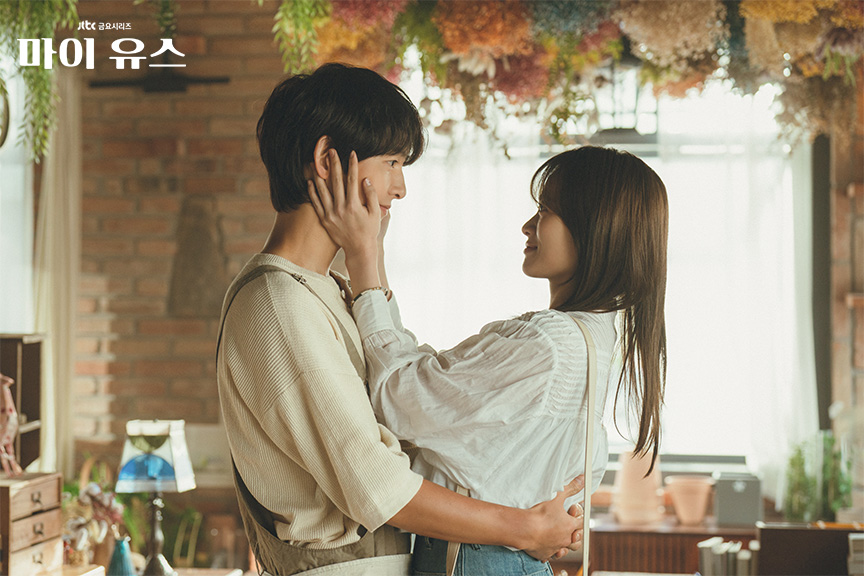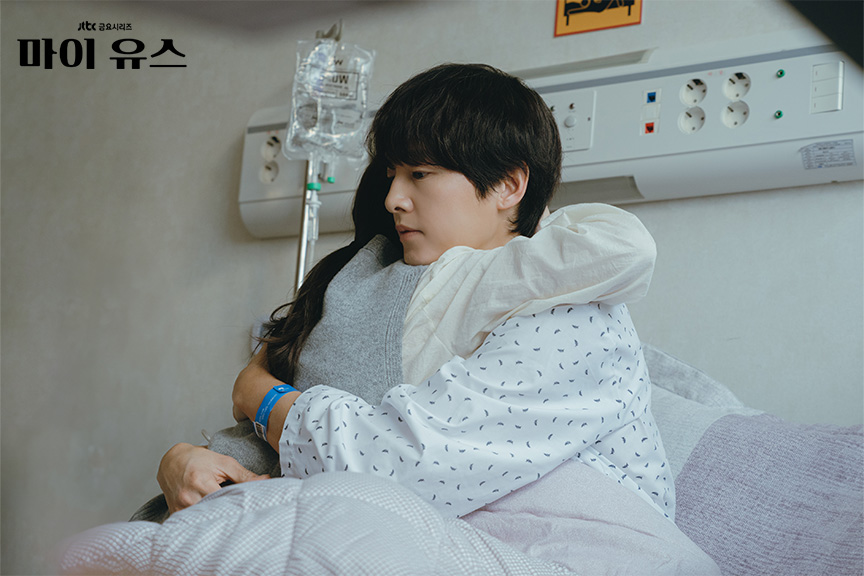
As My Youth comes to a close, Episodes 11 and 12 beautifully capture the emotional core of the series — love, loss, and living in the moment. What began as a slow-burning, introspective drama about two people finding comfort in each other’s brokenness ends with a finale that lingers long after the credits roll. Song Joong-ki and Chun Woo-hee’s chemistry elevates the story, making these last two episodes a heartfelt farewell rather than a tragic ending.
Episode 11: The Calm Before the Goodbye
Episode 11 slows the pace, focusing on the simplicity of shared moments. Sunwoo Hae (Song Joong-ki) and Sung Je-yeon (Chun Woo-hee) have finally found peace with each other, but the awareness of Hae’s illness shadows every scene. Instead of grand gestures, the episode uses quiet interactions — making breakfast together, walking hand-in-hand, or laughing over old memories — to express love more powerfully than words could.
What stands out most is the maturity of their relationship. Both characters have evolved beyond the need to fix each other; they simply choose to be present. The writing allows the emotions to breathe, giving the audience time to reflect on how love can be both healing and fleeting.
Episode 12: A Soft and Honest Farewell
The finale doesn’t aim for dramatic shock or exaggerated closure. Instead, it embraces acceptance. Episode 12 focuses on the reality that not all love stories are meant to last forever — some are meant to be remembered. The emotional weight of every glance and every unspoken word is felt deeply.
Both Song Joong-ki and Chun Woo-hee deliver unforgettable performances here. Their subtle expressions and understated delivery make every scene resonate. The direction maintains a soft tone, focusing on details — the light falling through the window, the sound of laughter fading into silence — giving the finale a poetic touch. Rather than tying every plotline into a neat bow, the show leaves room for interpretation. It invites viewers to imagine what happens beyond the final scene, trusting that the emotions it has built will carry on even after the story ends.
Themes and Reflections
My Youth remains a masterclass in emotional restraint. It explores the idea that love isn’t defined by duration but by depth. The drama emphasizes how ordinary days — shared meals, simple walks, quiet nights — can become the most precious memories. The final episodes also reflect on self-acceptance and forgiveness. Both characters face their pasts with honesty, learning that growth doesn’t always mean moving forward; sometimes, it means standing still and appreciating what’s already there.
Performances That Speak Without Words
Song Joong-ki gives one of his most emotionally raw performances, portraying Sunwoo Hae with quiet vulnerability. His eyes alone communicate the exhaustion and hope of a man learning to let go. Chun Woo-hee, as Sung Je-yeon, perfectly balances practicality and tenderness. Together, they form a pair whose chemistry feels lived-in and real. The supporting cast enhances this atmosphere with subtle warmth, grounding the leads’ emotional journey without distracting from it. Every performance contributes to a cohesive, human story.
Episodes 11 and 12 of My Youth serve as an emotional conclusion to a drama that never relied on spectacle to make its mark. Instead, it chose truth — in its pacing, tone, and performances. It’s a finale that leaves viewers both heartbroken and healed, reminding us that love’s beauty often lies in its impermanence.
If you’ve been following this series, you’ll likely find yourself replaying the last scenes just to feel the silence again — a silence filled with meaning, loss, and love.